
Coiba Diving and Snorkeling: Prices, Season, and How to Book
The short answer: Coiba National Park is Panama’s UNESCO-listed marine park in the Pacific, reached by boat from the village of Santa Catalina. A shared snorkeling day trip runs about $65–120 per person; a two- or three-tank dive day trip runs about $140–190 per person. On top of the tour, every foreign visitor pays a $20 park fee in cash ($5 for Panamanian residents). January to March is peak whale shark and best-visibility season; July to October is humpback whale season. Most people base themselves in Santa Catalina, roughly a 5–6 hour drive or bus ride from Panama City.
Key facts
| Item | Detail (reviewed July 2026) |
|---|---|
| What it is | Coiba National Park — UNESCO World Heritage site since 2005; 800+ fish species, 33 shark species |
| Snorkeling day trip | ~$65–120/pp shared · full day · boat, guide, gear, lunch typically included |
| Diving day trip | ~$140–190/pp for 2–3 dives · e.g. $155 (2 dives) / $185 (3 dives) at Panama Dive Center |
| Park fee | $20 per foreign visitor per day · $5 Panamanian residents · cash, not included in tour price |
| PADI Open Water course | ~$480–525 including Coiba dives, gear and materials (park fee separate) |
| Multi-day dive camp | From ~$1,150/pp for 3 days / 9 dives with island accommodation, meals and park fees |
| Hotel + dive packages | From ~$590 for 3 nights / 2 diving days (Scuba Coiba) |
| Main gateway | Santa Catalina, Veraguas — ~5.5 h drive from Panama City, or bus via Soná (~$15 total) |
| Boat transit to the park | Roughly 1–1.5 h each way from Santa Catalina, sea conditions depending |
| Best visibility | January–March (also peak whale shark) · 15–20 m / 50–70 ft typical |
| Humpback whales | July–October, passing between the Galápagos and Costa Rica |
| Overnight on the island | Only the ranger station cabins (basic, shared bath, generator power) — book through an operator |
Snorkel, dive, or multi-day? Pick by budget and certification
| Option | Price (2026) | Time | What you get |
|---|---|---|---|
| Snorkeling day trip | ~$65–120/pp + $20 park fee | Full day from Santa Catalina | Two to three snorkel stops (reef and island bays), beach time at Granito de Oro, lunch, guide |
| Two-tank dive day trip | ~$140–160/pp + park fee | Full day | Two guided dives at park sites, tanks, weights, gear, lunch |
| Three-tank dive day trip | ~$180–190/pp + park fee | Long day | A third dive added when sea conditions allow |
| PADI Open Water course | ~$480–525 | 2–3 days | Theory, confined sessions and 4–6 open-water dives, most of them inside the park |
| Multi-day dive camp | From ~$1,150/pp | 3 days / 2 nights / up to 9 dives | Boat transfers, island accommodation, all meals, park fees |
| Liveaboard | Quoted per trip | Multi-night | Coiba is usually a leg on wider Eastern Pacific itineraries (Coiba–Cocos–Malpelo) rather than a standalone week |
Snorkeling is the default for most visitors and needs no certification — the park’s shallow reefs are the draw, not depth. Certified divers get the better end of the deal: the same boat ride reaches sites where hammerheads, whale sharks, white-tip reef sharks and large schooling fish are routine rather than lucky.
What you actually see
Coiba was a penal colony until 2004, which is precisely why the reefs survived — almost nobody was allowed near them for a century. UNESCO listed the park in 2005. Bahía Damas holds the largest coral reef in Central America and the second largest in the eastern Pacific, roughly 135 hectares. The park sits on the same underwater migratory corridor as the Galápagos and Cocos, which is what brings the big animals: whale sharks, giant manta rays, scalloped hammerheads, and 33 recorded shark species across 800-plus fish species.
Granito de Oro, a small island with a white-sand beach and a shallow reef right off it, is the standard snorkeling stop and the one most day trips build around. Wahoo Rock is a common late-afternoon stop on the way back — the spot operators check when whale sharks are in the area.
When to go
January–March is the strongest all-round window: clearest water, and peak whale shark season (some operators extend the whale shark window to December–April). Visibility typically runs 15–20 metres.
May–November brings more plankton in the water. That trades visibility for feeding activity — good for manta rays, less good for photographs.
July–October is humpback whale season, when the whales pass Coiba travelling between Costa Rica and the Galápagos. Sightings from the dive boat are common in this window, which makes it the best overlap for people who want both underwater time and whales. If whales are the priority rather than the diving, the Gulf of Chiriquí whale-watching trips north of the park run on the same seasonal calendar.
Coiba’s rainy season roughly matches the rest of Pacific Panama (May–November), and rough seas can shorten or cancel a boat day at any time of year. Build a spare day into the trip.
Getting there: Santa Catalina
Nearly all Coiba day trips leave from Santa Catalina, a small surf village in Veraguas province.
- By car: roughly 5.5 hours from Panama City. Inter-American Highway west past Santiago de Veraguas, turn off at La Peña, then south through Soná.
- By bus: Albrook Terminal in Panama City to Soná (about 5 hours, ~$10), then a connecting bus to Santa Catalina (~$5). There is no direct bus — you change at Soná or Santiago. Departures from Albrook are limited to a few morning services, so this is a full travel day.
- Then: the boat crossing to the park takes about an hour to an hour and a half each way.
Pixvae, on the northern side of the park, is a smaller second gateway with its own dive base, but Santa Catalina has the operator density, the hostels, and the connections.
Practical notes before you book
- Bring cash. The $20 park fee is collected separately and card facilities in Santa Catalina are unreliable. Bring more cash than you think you need.
- The park is permit-controlled. Access is managed by Panama’s environmental authority and operators handle the permits — you cannot simply hire a boat and go.
- Overnighting inside the park means the ranger-station cabins: air-conditioned but basic, shared bathrooms, generator power on a fixed evening schedule, bring your own towel. Book it through an operator, not independently.
- Nitrox is available from several Santa Catalina centres if you are certified, and is worth it on three-dive days.
- Currents at the outer sites are real. Some operators require Advanced Open Water or a minimum logged-dive count for the more exposed sites; ask when booking rather than on the boat.
How to book
Snorkeling and single-day dive trips are widely listed on the major online tour platforms and can be booked direct with the Santa Catalina dive centres. Weekend and dry-season (January–April) boats fill first, but Coiba is nowhere near San Blas levels of demand — a week or two ahead is usually enough outside holidays.
PADI courses, multi-day dive camps and liveaboard legs are mostly sold direct by the operators rather than through the platforms. Prices vary by group size and season, so it is worth requesting quotes from two or three centres. Send a request with your dates, group size and budget.
FAQ
How much does it cost to dive or snorkel Coiba?
A shared snorkeling day trip from Santa Catalina runs about $65–120 per person; a two-tank dive day is around $140–160 and a three-tank day around $180–190. Every foreign visitor also pays a $20 park fee in cash on the day ($5 for Panamanian residents), which is almost never included in the advertised price.
Do I need to be a certified diver to visit Coiba?
No. Snorkeling day trips are the most common way to see the park and require no certification. If you want to dive and are not certified, Santa Catalina dive centres run PADI Open Water courses for roughly $480–525 that put most of your training dives inside the park itself.
When is the best time to dive Coiba?
January to March for the clearest water and peak whale shark odds. July to October if you want humpback whales, accepting slightly greener water. May to November brings more plankton — better for manta rays, worse for visibility.
How do I get to Coiba from Panama City?
There is no direct route. Drive about 5.5 hours to Santa Catalina, or take a bus from Albrook Terminal to Soná (~5 hours, ~$10) then a connecting bus to Santa Catalina (~$5). From Santa Catalina, the boat to the park is another hour to an hour and a half each way. Plan a full day of travel in each direction.
Is Coiba better than Cocos Island in Costa Rica?
They are different trips. Cocos is a 30-plus hour liveaboard crossing costing several thousand dollars, aimed at experienced divers chasing hammerhead schools. Coiba sits on the same migratory corridor but is reachable as a day trip for under $200 including the park fee, and works for snorkelers as well as divers. For most travellers Coiba delivers a large share of the marine life at a fraction of the cost and commitment.
Can I stay overnight on Coiba island?
Yes, but only at the ranger-station cabins, which are basic — shared bathrooms, generator electricity on a fixed evening schedule, no towels provided. They are booked through tour operators as part of multi-day dive camps rather than reserved independently.
This guide is for general information only and is not travel, legal, or financial advice. Prices, park fees and boat schedules change — confirm directly with operators before booking. Last reviewed: July 2026.
Sources
- UNESCO / Oceana — Coiba National Park declared a World Heritage Site: https://europe.oceana.org/press-releases/coiba-national-park-declared-world-heritage-site-unesco/
- Autoridad de Turismo de Panamá (official) — Coiba National Park: https://www.tourismpanama.com/outdoors-and-nature/nature-parks/national-parks/coiba-national-park/
- Panama Dive Center — Coiba diving information and day-trip pricing: https://panamadivecenter.com/coiba-panama-scuba-information/
- Panama Dive Center — PADI courses (Open Water pricing): https://panamadivecenter.com/santa-catalina-scuba-courses/
- Scuba Coiba — dive and hotel packages: https://scubacoiba.com/hoteldivepackages/ · https://scubacoiba.com/diving/
- Diving Coiba — published course and trip price list: https://www.divingcoiba.com/copie-de-freediving-and-apnea
- Coiba Dive Center — day trips and how to get to Santa Catalina: https://coibadivecenter.com/ · https://coibadivecenter.com/how-to-get-here
- Dive Base Coiba (Pixvae) — park background and multi-day packages: https://divebasecoiba.com/about-coiba/
- Coiba Island — cost breakdown and dive camp pricing: https://coiba-island.com/how-much-cost-visit-coiba-island/ · https://coiba-island.com/explore/tours/coiba-dive-camp-3-days-9-dives-for-adventure-divers/
- Snorkel Coiba — ultimate guide to visiting Coiba (2026), snorkeling tour pricing: https://snorkelcoiba.com/blog-ultimate-guide-coiba.html
- Premier Coiba Tours — 1-day snorkeling expedition: https://www.premiercoibatours.com/expeditions/coiba-day-trip/
- PADI Blog — best time to dive Panama (seasons, visibility, whale sharks, humpbacks): https://blog.padi.com/best-time-to-dive-panama/
- Coiba Island — best time for whale watching in Coiba: https://coiba-island.com/best-time-for-whale-watching-in-coiba-panama/
- Wikivoyage — Coiba National Marine Park (permits, ranger-station cabins): https://en.wikivoyage.org/wiki/Coiba_National_Marine_Park
- Rome2Rio / Panama Holiday — Panama City to Santa Catalina routes and fares: https://www.rome2rio.com/s/Panama-City/Santa-Catalina-Veraguas-Panama · https://panama-holiday.com/how-to-go/panama-city-to-santa-catalina/
- Smithsonian Magazine — Coiba’s penal-colony history and biodiversity: https://www.smithsonianmag.com/travel/how-a-former-penal-colony-in-panama-became-biodiversity-hotspot-180980357/
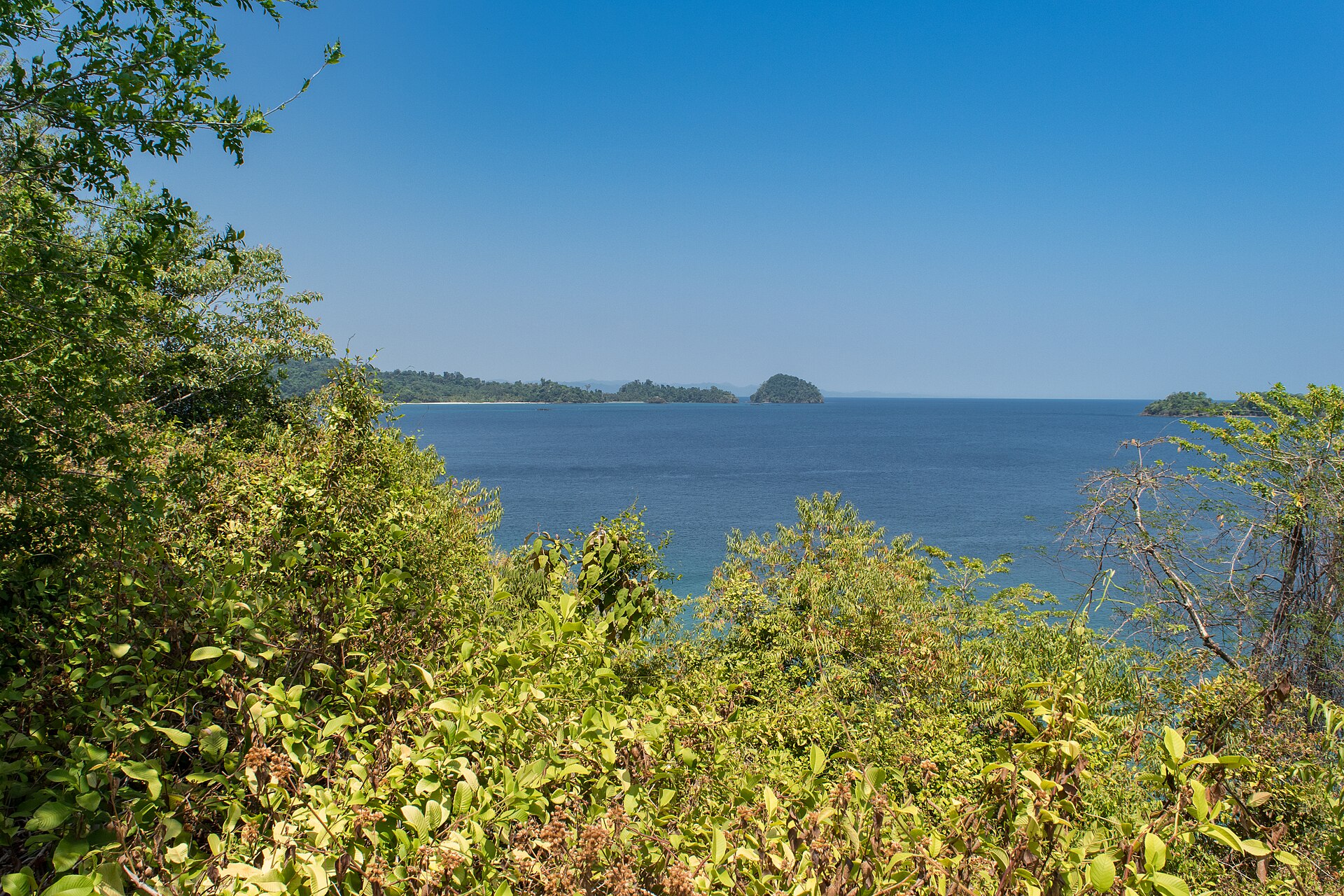
Photo credit: Coiba Panama (26216765884) by dronepicr, CC BY 2.0, via Wikimedia Commons.

All prices and other statistics are subject to changes beyond our control. We will try to update this information as often as possible. Refer to sources listed for more information.